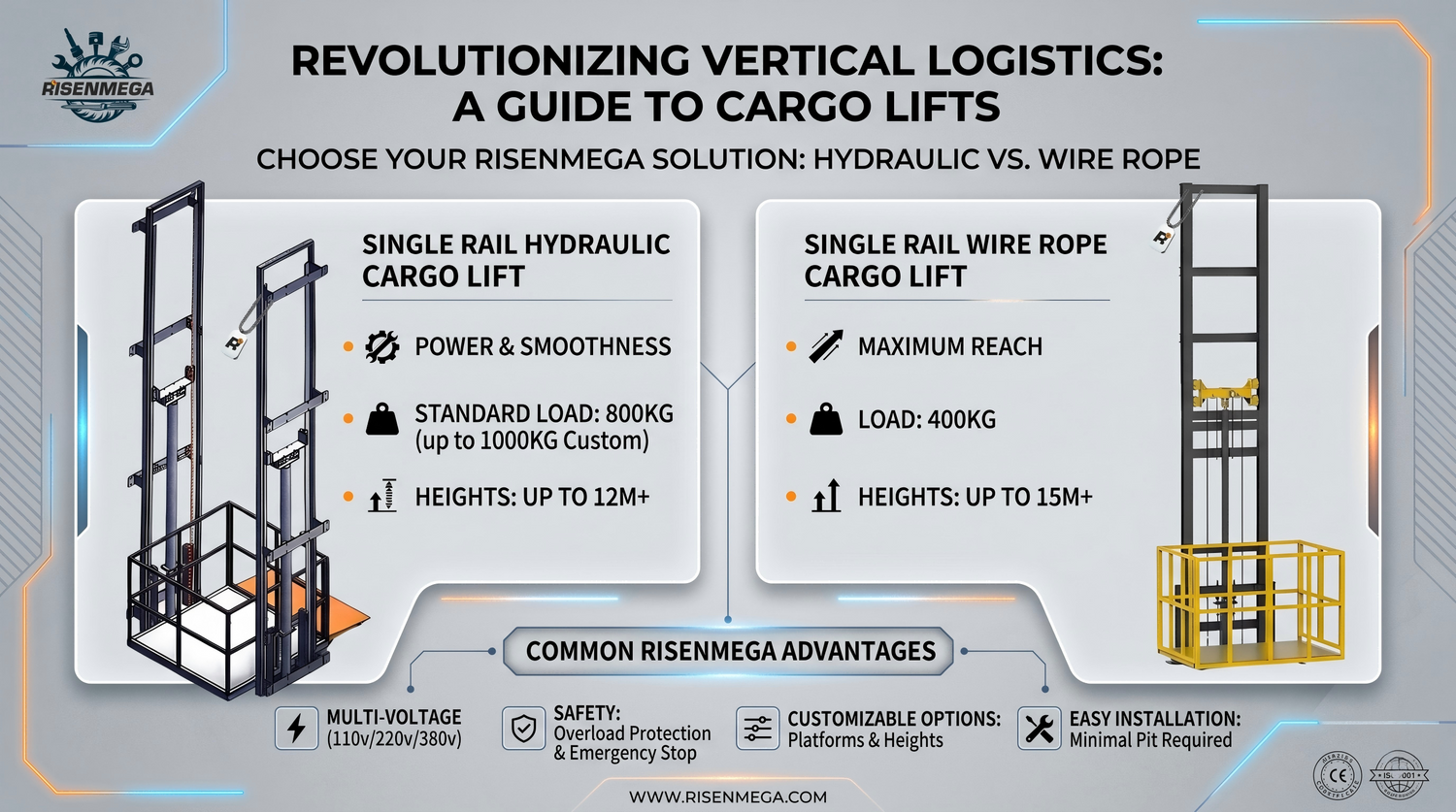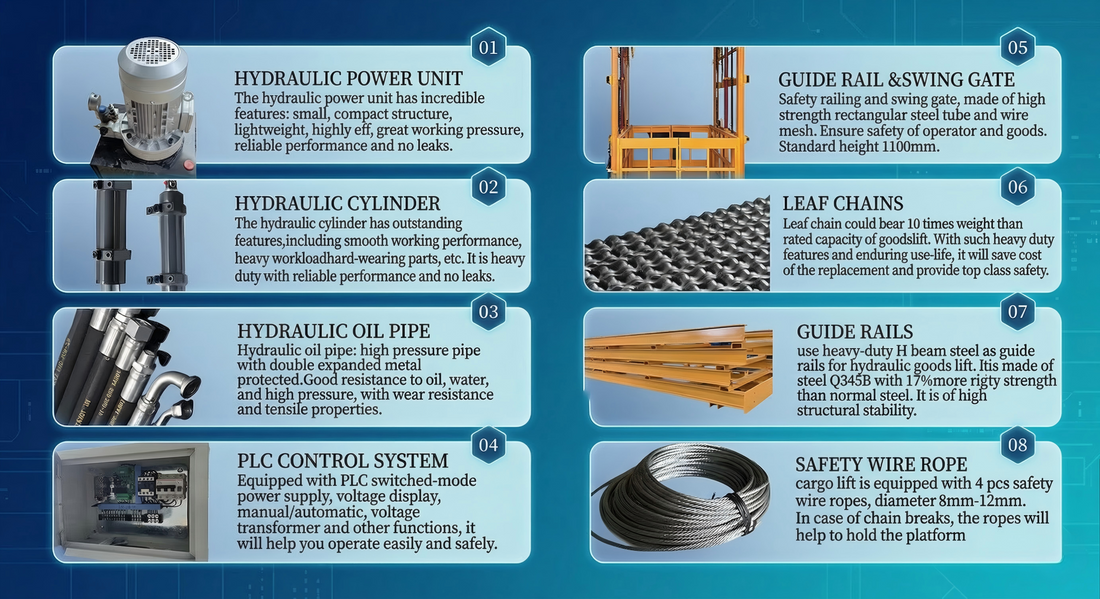
Detecting an perfect tool for shifting cargo poses a hard job.This particular review examines the environment of cargo lift methods, going over various genres of lifts, from standard scissor lifts and pneumatic platforms to more progressive vertical delivery systems.It will examine factors like load requirements, footprint constraints, and pricing considerations to advise you choose the perfect possibility for your establishment.Should you be dealing with heavy pallets, oversized machinery, or standard freight, understanding your requisites is paramount for a successful implementation.
Material Conveyor Varieties for Your Establishment
Identifying the right material elevator is a important decision for any enterprise that manages significant measures of supplies.A vast wide range of options available, each with its own upsides and negatives.Review rigorously your distinct needs. Regular choices include:
- Pump-Driven Elevators: Fitting for compact ascents and operations.
- Electrified Elevators: Offer amplified quickness and strength for superior towers.
- Robotic Lifts: Manufactured for relocating packages and additional weighty merchandise.
Pathway Baggage Ascenders: Performance and Security
Recent guide rail baggage ascenders are revolutionizing item handling in factories, offering a significant gain to both capability and protection.Such systems utilize a protected trackway system to precisely transfer substantial freights vertically, curbing the need for hands-on handling.The core formation incorporates various safeguarding features, including reserve arresting methods and solid framework, ensuring technicians and neighboring areas are guarded from potential vulnerabilities.At last, these lifts provide a cost-saving and dependable solution for establishments seeking to enhance their systems workflows.
Choosing the Suitable Materials Lifter for Manufacturing Necessities
Picking the correct product conveyor for a mechanical location requires rigorous evaluation.Countless aspects must be considered, including the height of the compulsory carriage, the heft allowance of the products being carried, and the available room. Besides, reliable specifications and compliance with pertinent protocols are critical. Neglecting these matters could result in underperformance and expected risks.
Gains of a Consignment Raiser in Distribution Center Functions
Integrating a cargo platform within a stockroom can yield major benefits to overall workflow. The following instruments profoundly lessen the need for hands-on managing of sturdy things, thereby lowering the risk of laborer damages. In addition, a load lifter increases efficiency by facilitating faster handling of goods over distinct steps, ultimately yielding to advanced dispatch and reduced operational costs.
Comprehending Various Kinds of Items Platforms
Handling large items within a facility necessitates specialized equipment, and comprehending the distinct types of goods elevators is paramount. They are not your standard passenger elevators; they are engineered to acquire massive loads and often feature exceptional characteristics.One can examine some typical options. First, there are factory elevators, strong systems designed for demanding use in manufacturing plants. Then, we have platform elevators, which apply a planar platform to convey loads vertically. Lastly, material lifts offer a simple and well-designed solution for conveying commodious goods.
- Factory Elevators: Generally used in manufacturing environments.
- Even Elevators: Well-suited for crated products.
- Telescoping Lifts: Yield a safe lifting solution.
Conserving Material Elevators with Framework Mechanisms
Pertaining to warehouses facing narrow floor room, innovative cargo conveyors utilizing track assemblies offer a usable alternative. Such types of systems minimize the range required while nevertheless carefully carrying heavy commodities. This architecture usually involves a elevated sliding board that tracks a assigned line, allowing for superior use of the at hand room.
Exploiting Vertical Volume with a Goods Transporter
In state-of-the-art storehouses, leveraging towering area is paramount for efficiency. A material raiser offers a significant approach to this challenge. These systems facilitate you to organize inventory above than traditional container systems, consequently growing your accommodation. Reflect goods lift on the perks:
- Cut area requirements
- Upgraded artifact handling
- Greater rate maximum
- Possible cut in manpower financials
Establishing a Shipment Transporter: Main Considerations
Deciding to install a freight lift can be a substantial investment for your company, but ensuring a effective process requires careful arrangement. First, you’ll are expected to assess your unique requirements – including the capacity of the products you’ll be carrying and the span the lift will reach. Extensive site analysis is also critical, including validating structural robustness and unused space. You’ll in all likelihood ought to earn the obligatory permissions from local officials. Finally, regularly retain a competent installer to certify sound operation and alignment with municipal codes.
- Review weight restrictions.
- Inspect site openness.
- Obtain the correct permissions.
- Commission a experienced operator.